
Webster Technique vs. Standard Care for Pregnancy Pelvic Girdle Pain
The Webster Technique targets the underlying pelvic imbalance that causes pregnancy pelvic girdle pain, while standard care mostly manages the symptoms it produces. Pelvic girdle pain is a common complaint during pregnancy. It shows up as discomfort in the joints that connect the pelvis, and it tends to track with ligament laxity and postural shifts as the pregnancy progresses. Standard care usually centers on managing those symptoms. That means supportive belts, over-the-counter pain relief, activity changes, and general stretching routines. Those measures can ease the discomfort for a while. They do not correct the neuro-biomechanical imbalance in the pelvis that generates the pain in the first place. The Webster Technique is different. It is a specific chiropractic analysis and adjustment, not general spinal work, built to assess sacral alignment and pelvic balance during pregnancy. Instead of muting the pain as an isolated sensation, the adjustment works on the structural relationship between the sacrum, the pelvis, and the surrounding ligaments. The goal is to restore proper pelvic biomechanics and reduce undue tension on the structures supporting the uterus. Because it works at the level of pelvic function rather than symptom suppression, its intended effects reach past pain relief. The aim is more balanced pelvic alignment, which matters both for comfort through pregnancy and for the mechanics of labor and delivery. Standard care and the Webster Technique are not interchangeable strategies. One is oriented toward temporary relief of discomfort. The other is oriented toward correcting the biomechanical condition believed to generate that discomfort. That distinction is what separates an approach that addresses the root cause of pregnancy-related pelvic girdle pain from one that only addresses its symptoms.
Last Updated: 2026-09-15
What Pregnancy Pelvic Girdle Pain Actually Signals
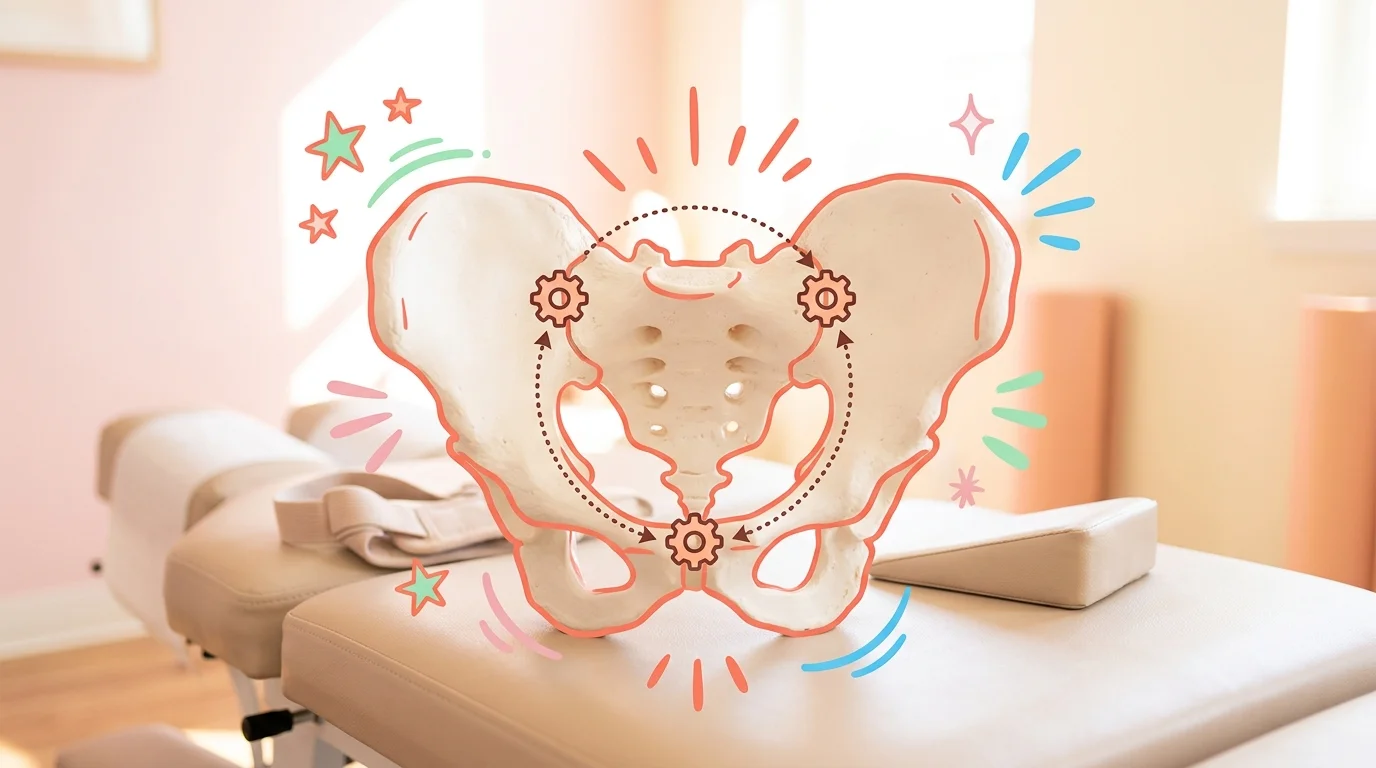
Pelvic girdle pain is not a rare complaint or a minor inconvenience of pregnancy. Worldwide, its prevalence has been reported to range from 7% to 84% of pregnant women across studies, a wide spread that reflects how differently this condition gets measured and managed. That variance matters. It signals a condition still poorly understood by the systems built to address it, and one worth examining in the clinical guide to pelvic balance and sacral alignment rather than dismissing as ordinary discomfort.
This is one of the most disruptive complaints of pregnancy, affecting mobility, sleep, and daily function long before delivery ever arrives. Researchers tracking this condition through sources indexed in PubMed Central treat it as a distinct biomechanical concern, not a footnote to normal pregnancy aches. The pain is a signal. It points toward a structural relationship that has shifted out of balance, not a sensation that exists in isolation.
Why Symptom Relief Alone Leaves the Root Problem Standing
Standard care did not fail by accident. It was built to quiet discomfort, not to correct the mechanics making it.
And that distinction changes everything about how a pregnancy unfolds from here. A patient wrestling with pregnancy sciatica and nerve pressure that standard stretching protocols never resolve is usually living the same pattern: symptom management aimed at a structural problem.
How Standard Care Is Structured Around Pain Management
Supportive belts, activity modification, and stretching protocols share one design goal. They reduce the sensation of pain without assessing why the pelvis is producing it. Care often focuses on managing symptoms like pain and inflammation rather than the joint relationship generating them.
This is not a knock on the intent behind these tools. It is a description of their reach.
Where Symptom-Focused Protocols Run Into Their Limits
"A standardized care plan works for most pregnant patients" is a comfortable assumption, and it falls apart under real variation. An early second-trimester mom with a mild ligament ache and a mom weeks from delivery carrying months of one-sided pelvic pain are solving two different problems. Standardized protocols were written for the calendar, not for the pelvis in front of the practitioner.
The data on one-sided pelvic girdle pain makes the limitation concrete. Research comparing chiropractic care against conventional primary care for this presentation found no statistically significant difference in sick leave, pain, disability, or general health status between the two groups, a finding detailed in research published through PMC. When neither symptom-focused pathway outperforms the other, the pain itself was never the right target.
What the Webster Technique Is Built to Assess and Correct
The Webster Technique is not a general spinal adjustment applied to a pregnant patient. It is a specific chiropractic analysis built around one structural relationship: the sacrum, the pelvis, and the ligaments that stabilize both. That specificity is the entire point. A licensed chiropractor can legally see a pregnant patient, but a DC license alone says nothing about prenatal competency.
The Assessment-to-Adjustment Sequence
Assessment comes first, and it is not optional. A practitioner evaluates sacral alignment and pelvic balance before any adjustment is applied. That sequence exists because correcting a structure nobody has actually assessed is guesswork, not care. The round ligament tension and how it relates to pelvic symmetry matters here, since ligament strain patterns often reveal which side of the pelvis is carrying the imbalance.
What Sets Webster-Certified Practice Apart from General Adjustment
Webster Certification through the International Chiropractic Pediatric Association is what separates this analysis from general adjustment work. It is a distinct credential, not a default skill every DC carries — and it remains the exception in day-to-day practice. That gap is exactly what this section has been building toward.
How the Research Record Reads on Both Approaches

Two data points already sit in this record: a wide prevalence range and a comparative study showing no clear edge for symptom-focused care. What is missing is a direct measure of what happens when the Webster Technique is the intervention. That measure exists.
| Measure | Webster Technique Care | Standard Care | Source Finding |
|---|---|---|---|
| Prevalence of Pelvic Girdle Pain | Not a prevalence measure | Not a prevalence measure | Worldwide, its prevalence has been reported to range from 7% to 84% of pregnant women across studies |
| Pain Interference (Function, Sleep, Daily Movement) | Significant decrease from baseline to follow-up | Not measured in this comparison | A significant decrease was also found with pain interference |
| Sick Leave, Pain, Disability, General Health Status (One-Sided PGP) | No statistically significant difference versus conventional primary care | No statistically significant difference versus chiropractic care | There was no statistically significant difference in sick leave, pain, disability, or general health status between the two groups |
| Care Model | Primary Focus | Typical Components |
|---|---|---|
| Standard Care | Symptom management | Supportive belts, activity modification, over-the-counter pain relief, general stretching protocols |
| Webster Technique | Correcting pelvic biomechanics | Sacral alignment assessment, pelvic balance analysis, targeted chiropractic adjustment |
| Standard Care | Reducing pain sensation | Generalized guidance applied broadly, regardless of which side or structure is imbalanced |
| Webster Technique | Restoring structural relationships | Assessment of the sacrum, pelvis, and stabilizing ligaments before any adjustment is applied |
What the Pain-Interference Findings Show
Here is the number that matters. Pregnant patients receiving chiropractic care with the Webster Technique showed a significant decrease in pain interference from baseline to follow-up, a shift documented in findings available through PMC. And pain interference is not the same as pain intensity. It measures how much the pain disrupts function, sleep, and daily movement, which is the actual burden pregnant patients live with. Cookie-cutter care plans fail the patient whose needs are time-bound and stage-specific, and a measurable drop in functional interference is exactly what a stage-specific approach produces.
Where the Comparative Data Still Shows Parity
The comparative study on one-sided pelvic girdle pain still stands, and it still shows parity between chiropractic care and conventional primary care on sick leave, disability, and general health status. Parity on those broad outcome measures does not erase a documented gain in pain interference specifically. It clarifies where each approach earns its results. Clinics building prenatal care plans around the Webster Technique are targeting the mechanism, not competing on the same generic scoreboard standard care was measured against.
Frequently Asked Questions
That data raises real questions about the mechanics and the process. Here are straight answers to the ones patients ask most.
Is the Webster Technique safe during all trimesters of pregnancy?
Yes. Sacral and pelvic assessment fits every trimester, with the adjustment adapted to each stage's changes. A practitioner checks alignment before applying any technique, no matter how far along you are.
How is the Webster Technique different from a regular chiropractic adjustment for pelvic pain?
A regular adjustment works on general spinal function. The Webster Technique zeroes in on one relationship: the sacrum, the pelvis, and the ligaments tying them together. It comes only after that structure is assessed.
What does standard care for pregnancy pelvic pain typically involve?
Standard care typically centers on symptom management. Supportive belts, over-the-counter pain relief, activity modification, and general stretching protocols reduce discomfort without assessing the pelvic imbalance producing it.
Can the Webster Technique be used alongside physical therapy for pelvic pain?
Yes. The Webster Technique corrects pelvic biomechanics directly, while physical therapy builds the strength and movement patterns around that structure. They work together, not against each other.
How many sessions are typically needed to notice a change in pelvic girdle pain?
This varies by presentation and cannot be reduced to a fixed number. What matters is assessing pelvic balance first, then adjusting based on how the structure responds.
What does a Webster Technique assessment measure before an adjustment is made?
An assessment measures sacral alignment and pelvic balance before any adjustment is made. This includes evaluating which side of the pelvis is carrying tension and how the surrounding ligaments are responding.
The Bottom Line
Pelvic girdle pain is a signal, not a flaw to mute. Like a car's alignment light, it points to a mechanical relationship that has shifted out of place. Silencing the light never fixes the alignment.
Standard care answers the alignment light by covering it. The Webster Technique answers it by assessing the sacrum, the pelvis, and the ligaments carrying the imbalance. One mutes the signal. The other corrects what triggered it.
That distinction is the whole argument this article has made. Momma's Chiro built its prenatal approach around correcting the mechanism, not managing the symptom. So if pelvic girdle pain has been part of this pregnancy, understanding which approach targets its actual cause starts with scheduling a Webster Technique evaluation.