
The Biomechanics of Round Ligament Tension: How Webster Technique Restores Pelvic Symmetry
Round ligament pain is a signal, not a sentence you have to serve out. It shows up when pelvic asymmetry and sacral misalignment pull unevenly on the ligaments that support a growing uterus. The Webster Technique answers that by restoring proper pelvic and sacral biomechanics, not by simply quieting the ache. The round ligaments run from the uterus down into the groin, holding the uterus steady as it grows. When the pelvis sits crooked or the sacrum is misaligned, those ligaments carry an uneven pull. That is the sharp, tugging pain so many pregnant patients describe. The Webster Technique is a specific chiropractic sacral analysis and diversified adjustment built to find and correct that underlying imbalance. It analyzes the sacrum and pelvis for misalignment, applies a precise adjustment to the sacrum, and uses soft tissue work to release tension in the surrounding structures. It treats round ligament pain as a mechanical problem to solve, not a normal part of pregnancy to endure. Correcting sacral subluxation and pelvic asymmetry reduces the uneven tension dragging on the round ligaments. That eases pain and supports balanced pelvic function at the same time. Pelvic symmetry also shapes the space available inside the pelvic girdle, so correcting misalignment is associated with reducing intrauterine constraint, which matters for fetal positioning. The technique is applied throughout pregnancy as part of care focused on pelvic and sacral biomechanics. It differs from a general adjustment because it analyzes the sacral and pelvic relationships unique to the pregnant body. The core mechanism is structural correction, not symptom masking. It addresses the biomechanical root instead of briefly numbing the sensation.
Last Updated: 2026-09-15
What Round Ligament Tension Is Actually Telling You

Round ligament pain announces itself as a sharp pull or a tugging sensation low in the belly or groin, and it often bites hardest with a sudden move. Standard prenatal guidance waves it off as background noise, just the price of a growing uterus. But that framing misses what the sensation is actually doing.
The pain is a signal, not static. It is frequently a key indicator of underlying pelvic imbalance rather than an unavoidable symptom to endure. A smoke alarm going off does not mean the alarm is broken. It means something underneath needs attention, which is the same logic behind the clinical guide to a balanced pelvis and an aligned sacrum.
Why 'It's Just Pregnancy' Is an Incomplete Answer
Pregnancy places significant structural and hormonal stress on the pelvic girdle. Ligaments loosen, weight distribution shifts, and the sacrum bears new loads it was not built for at that scale. Against this backdrop, "it's just pregnancy" treats every ache as noise from the same generic process.
That framing erases the difference between expected change and unaddressed imbalance. Not every pregnant body carries the same pelvic asymmetry, so not every case of round ligament pain has the same cause. A license to practice does not automatically include the training to tell the two apart. Prenatal specialization is a distinct competency, established through Webster Certification with the ICPA, and most practitioners seeing pregnant patients have not completed it.
The Standard Advice Loop
The standard advice loop is predictable. Rest more, use a support belt, wait for the third trimester to pass.
Each step manages the sensation without asking why the tension exists. That gap is exactly where a closer look at how the webster technique compares with standard pelvic girdle pain care becomes relevant, since that is where symptom advice and structural correction part ways. Symptom management stops at the ache. It never reaches the asymmetry producing it.
How Sacral Subluxation Creates Round Ligament Strain
Sacral subluxation does not stay isolated to the sacrum. Once the sacrum shifts out of neutral position, the ligaments and muscles attached to it compensate, and that compensation travels forward into the round ligaments themselves.
This is a chain reaction, not a single point of failure. A misaligned sacrum tilts the pelvic bowl, one round ligament shortens while the other stretches, and the uterus is pulled into an uneven position it was never meant to hold on its own.
| Pelvic Structure | Role in the Chain | Effect When Misaligned |
|---|---|---|
| Sacrum | Serves as the base of the spine and the anchor point for pelvic stability, holding the pelvic bowl level as pregnancy weight shifts forward. | A misaligned sacrum tilts the pelvic bowl, transferring uneven load into every structure attached above and below it. |
| Innominate bones | Form the sides of the pelvis and rotate around the sacrum to accommodate posture changes and a growing uterus. | Uneven rotation shortens the space on one side of the pelvic bowl, pulling the uterus off its centered position. |
| Round ligaments | Suspend the uterus from the pelvic wall and lengthen gradually as pregnancy progresses to keep it stable. | An asymmetrical pelvis forces one ligament to stretch further than the other, producing the sharp pulling pain patients describe. |
| Pelvic floor | Works with the sacrum and innominate bones to support the growing uterus from below and maintain functional balance. | Compensation for an unresolved sacral shift changes muscle tension patterns here, compounding strain instead of absorbing it. |
The Pelvic Chain Reaction
General adjustment training does not isolate this chain. A prenatal-trained practitioner reads the sacral base, the innominate bones, and the ligamentous tension pattern together, because fixing one link and ignoring the rest leaves the imbalance untouched. That same distinction sits at the heart of why prenatal pelvic mechanics shape a baby's positioning, since an unresolved sacral shift changes the room the uterus has to work with.
Certification through the ICPA exists because this chain reaction is specific to the pregnant pelvis. A credential to adjust a spine is not the same credential to read this pattern. Webster Certification functions as the floor for pregnancy-focused care, not an optional add-on to general practice.
Why Generalized Prenatal Stretching Falls Short
Generalized prenatal stretching treats every pregnant body as an identical case. A 10-visit plan only makes sense if every pelvis carries the same imbalance, and none of them do. A mom at 12 weeks with a first twinge and a mom at 36 weeks whose pelvis has been compensating for months are two different assignments.
One-size stretching routines are built for handouts, not for the pelvis actually in the room. Stretching lengthens muscle tissue temporarily, but it cannot correct a misaligned sacrum. It never reaches the asymmetry pulling on the round ligaments in the first place. Assessing that asymmetry directly is the starting point for pregnancy chiropractic support built around the pregnant pelvis.
What the Webster Technique Actually Analyzes and Adjusts
The Webster Technique is a specific chiropractic sacral analysis and diversified adjustment built for all weight-bearing bodies. It is not a pregnancy-only trick. And it is not a general spinal tune-up either.
This is why the certification matters so much: the analysis it teaches does not exist in general chiropractic training.
| Care Component | What Standard Prenatal Advice Offers | What Webster Technique Analysis Adds |
|---|---|---|
| Sacral Position | Generally not assessed as part of round ligament pain guidance | Analyzed directly for misalignment through a specific sacral analysis before any adjustment is made |
| Pelvic Symmetry | Addressed indirectly, if at all, through general stretching or posture tips | Assessed as the structural source of uneven ligament tension, not a side effect to work around |
| Soft Tissue Around the Pelvis | Left unaddressed or referred out as a separate concern | Released through targeted soft tissue work performed alongside the sacral adjustment |
| Round Ligament Tension Itself | Managed through rest, support belts, or waiting for the discomfort to pass | Addressed through sustained contact aimed at the specific ligament under strain, following correction of the sacral pattern |
| Underlying Cause vs. Sensation | Treats the ache as the problem to manage | Treats the ache as a signal pointing to the asymmetry that produced it |
The Sacral Analysis and Adjustment Sequence
The sequence starts with analysis, not adjustment. First the sacrum and pelvis are assessed for the asymmetry pattern so common to the pregnant body. Only then does a precise sacral adjustment follow, paired with soft tissue work to release the tension around it.
A sustained thumb contact is then applied to a specific point on the belly, aimed at releasing tension in the corresponding uterine ligament. This closing step is documented in a case series held in PubMed Central, and it is what separates the technique from a generic adjustment aimed only at the spine.
Where Certification Changes the Analysis
General adjustment training stops at the spine. It was never built to isolate the sacral and ligamentous pattern unique to a growing uterus. That gap is exactly what Webster Certification closes.
Where Pelvic Asymmetry Goes Uncorrected
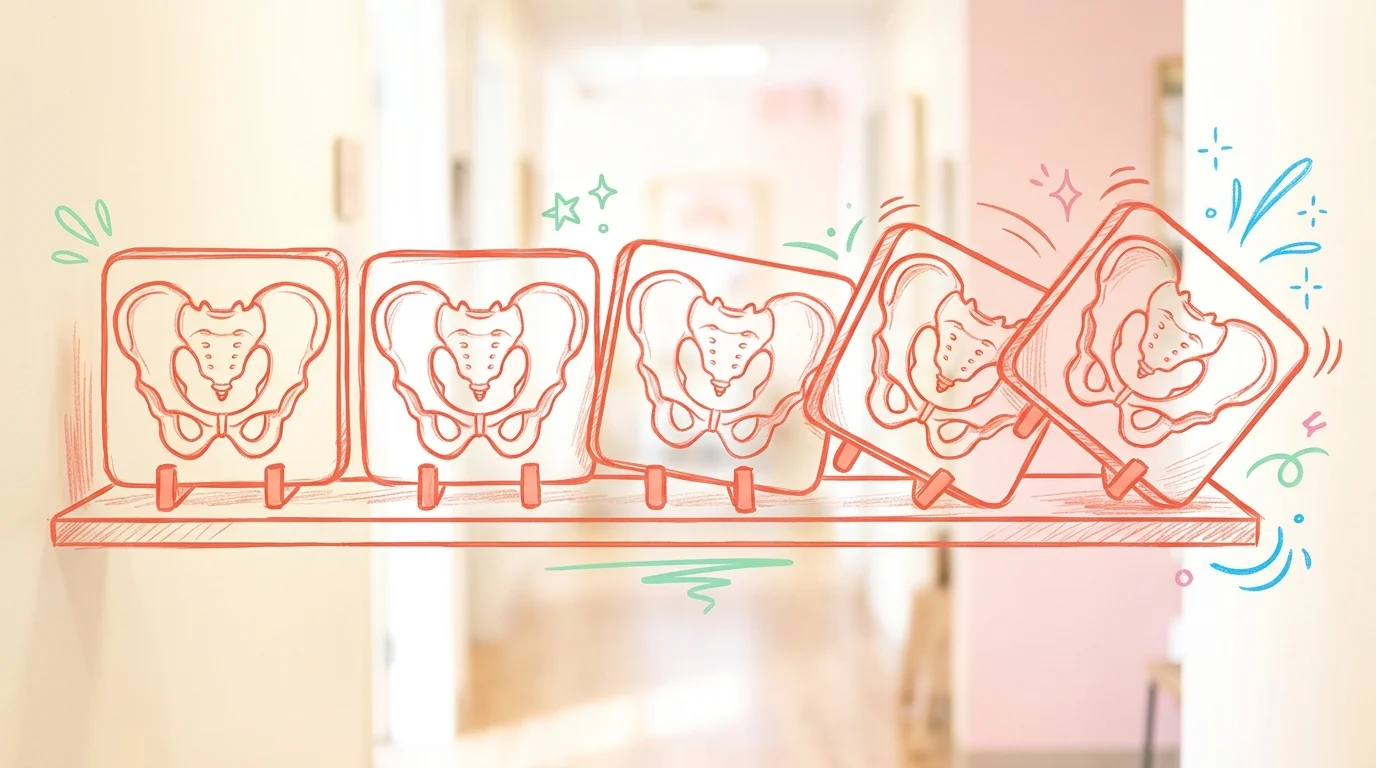
Pelvic asymmetry does not sort itself out on a schedule. Left uncorrected, the imbalance behind round ligament tension tends to stay put. Rest and a support belt quiet the sensation, but neither one touches the sacral shift underneath.
| Timeframe | Reported Outcome | Source Context |
|---|---|---|
| During pregnancy | Round ligament tension persists and often intensifies as the uterus grows, since the underlying pelvic asymmetry remains unaddressed | Reflects the pattern described where symptom management stops at the ache and never reaches the asymmetry producing it |
| Approaching delivery | Uneven pelvic mechanics carry into labor, since a compensating sacral pattern does not correct itself as due dates near | Consistent with the chain reaction described earlier, where a misaligned sacrum tilts the pelvic bowl and both round ligaments hold uneven tension |
| Postpartum | Pelvic girdle pain can continue well past delivery when the sacral shift underneath was never corrected during pregnancy | Aligns with reported outcomes showing pelvic girdle pain persisting for one to two years after giving birth in a meaningful share of cases |
| Future pregnancies | An uncorrected asymmetry pattern can resurface with added structural and hormonal stress, since the original imbalance was never resolved rather than reset | Builds on the earlier point that rest and support belts manage sensation without touching the sacral shift causing it |
The Cost of Unaddressed Asymmetry
And the cost does not stop at delivery. Postpartum recovery inherits whatever asymmetry pregnancy never corrected, because the body does not reset its alignment on its own after birth.
What the Data Shows About Pelvic Girdle Pain Outcomes
Pelvic girdle pain that continues past delivery bears this out. Around 8%-10% of women with pelvic girdle pain continue to have pain for one to two years after giving birth, a pattern documented in a study available through PMC's research archive. That warning, ignored long enough, keeps sounding well past the birth itself.
Frequently Asked Questions
Moms usually want the practical details next. Here are direct answers to the ones that matter most.
How does the Webster Technique differ from a standard chiropractic adjustment?
A standard adjustment works the spine in general. The Webster Technique reads the sacrum and pelvis for the asymmetry pattern common to pregnancy. Then it pairs a precise sacral adjustment with soft tissue work and a sustained thumb contact on the belly.
Is the Webster Technique safe throughout all trimesters of pregnancy?
Yes. The sacral analysis and adjustment work without pressure on the belly itself, which keeps the approach appropriate across all three trimesters. The specific focus shifts as the pregnancy moves along.
Can the Webster Technique help turn a breech baby?
The technique never tries to turn a baby directly. It corrects the sacral and pelvic imbalance that can crowd intrauterine space. That makes it relevant to positioning, not a guaranteed way to reposition a baby.
How many Webster Technique sessions are typically needed to feel a difference?
There is no fixed number that applies to every pelvis. Because each case reflects a different degree of sacral subluxation, the plan follows what the analysis finds rather than a generic visit count.
What does it mean for the pelvis to be 'out of alignment' during pregnancy?
It means the sacrum and the pelvic bones around it have drifted from their neutral relationship. That shift pulls unevenly on the round ligaments. And that uneven pull is what produces the sharp, tugging sensation so many patients feel.
What happens during the sacral analysis portion of a Webster Technique appointment?
The sacrum and pelvis are assessed for the specific asymmetry pattern tied to the pregnant body. This analysis determines where the adjustment and soft tissue work are directed, rather than applying a generic spinal check.
Where This Leaves the Pelvis — and the Pregnancy
The alarm was never the problem. It was pointing at the pelvis the whole time.
Round ligament tension traces back to sacral subluxation and pelvic asymmetry, not a growing uterus acting on its own. Restoring proper pelvic biomechanics does more than ease that pulling sensation. It builds a more optimal environment for fetal development and a smoother labor process, which is the whole point of correcting the cause instead of managing the ache.
A signal this specific deserves a correction this specific, not another stretch routine. If the pull in your belly has been dismissed as background noise, it is worth having the actual asymmetry assessed. That starting point is a Webster Technique evaluation.