
Relieving Pregnancy Sciatica in Huntington Beach: Why Standard Stretches Aren't Clearing the Nerve Pressure
Pregnancy sciatica is most effectively relieved by correcting the underlying pelvic misalignment that compresses the sciatic nerve, rather than by stretching the muscles surrounding it. As pregnancy progresses, hormonal changes loosen the ligaments supporting the pelvis, which allows the sacrum to shift out of its normal position. This shift, known as sacral subluxation, can place direct pressure on the sciatic nerve or the surrounding musculature, producing the sharp, radiating pain many pregnant women feel in the lower back, hip, and down the leg. Standard stretching protocols target the muscle where the pain is felt, but they do not address the structural cause of the compression. Because the pelvis remains tilted, the nerve stays under pressure regardless of how often the surrounding tissue is stretched. Chiropractic care aimed at correcting pelvic balance, most notably the Webster Technique, works by gently restoring proper alignment to the sacrum and pelvis. Once the pelvis is balanced, the structural pressure on the sciatic nerve decreases, allowing the nerve and surrounding tissue to decompress naturally. This approach treats the misalignment as the origin of the symptom rather than treating the symptom in isolation. Relief achieved this way tends to be more durable because the structural cause has been corrected, not merely masked. Sciatica during pregnancy can also stem from pelvic girdle pain or postural changes related to the growing uterus, so an accurate assessment of pelvic alignment is an essential first step before any care plan begins. Addressing the foundation of the pelvis, rather than the symptom radiating from it, is the mechanism through which lasting relief becomes possible.
Last Updated: 2026-09-15
What Sciatica Actually Is When Pregnancy Is the Cause
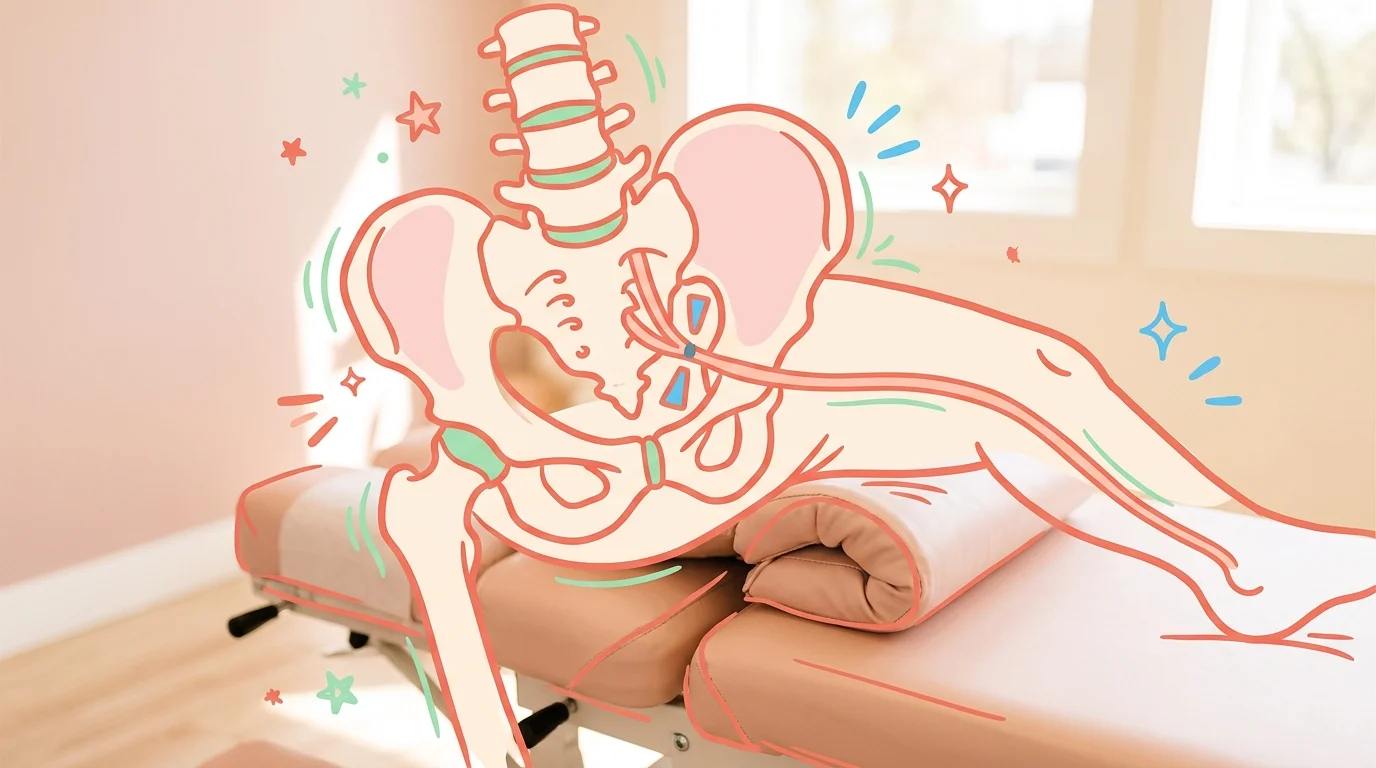
Sciatica starts when the sciatic nerve gets compressed somewhere along its path. That nerve runs from the lower back, through the hip, and down each leg. Pregnancy adds a variable most sciatica talk skips right over.
And that variable is the pelvis itself. Pregnancy-related sciatica often comes from specific biomechanical changes in the pelvis, not just tight muscles. That is exactly why muscle-focused fixes keep stalling out.
The Nerve Pathway Under Pressure
Picture a house sitting on a foundation that has shifted a little. Paint over the crack in the wall all you want. The crack comes back.
Stretching the leg or hip muscles is the paint. The pelvis is the foundation, and until it levels out, the nerve stays under load.
How Pregnancy Changes the Pelvic Environment
So what actually shifts inside the pelvic environment during pregnancy? The mechanics are covered in depth in the clinical guide to pelvic balance and sacral alignment, but the short version starts with ligament laxity loosening the joints that normally hold the sacrum steady.
Why the Stretch-First Protocol Keeps Missing the Structural Cause
Reach for a stretch. That's the default answer to sciatic pain. The logic assumes a tight muscle is irritating the nerve, not a bone sitting out of place.
Why Stretching a Compressed Nerve Can Backfire
Stretching a nerve that is already under structural pressure does not always help, and it can make things worse. Even a trained dancer has suffered a documented sciatic nerve injury, reported in PubMed Central, from a stretch held for only 30 minutes. A pelvis that is tilted does not care how flexible the surrounding muscle becomes.
What Standard Care Protocols Are Built to Solve Instead
Standard care protocols are built to solve muscular tightness, not pelvic misalignment. Many conventional recommendations for back pain, like certain stretches, fail to address the root cause of nerve pressure in pregnant women. A licensed chiropractor's general training does not automatically include prenatal-specific correction. Webster Certification through the ICPA is the credential built for this exact structural problem.
How Sacral Subluxation Actually Creates Nerve Pressure
Sacral subluxation is not a vague catch-all term. It describes a specific shift in the sacrum's position relative to the pelvic bones, and that shift changes how much space the sciatic nerve has to move without friction.
Locating the Misalignment
Finding the misalignment starts at the sacroiliac joints, where the sacrum meets the pelvis on each side. A trained hand feels the asymmetry there. It also catches uneven leg length while a mom is lying down, restricted rotation through the hips, and pain that moves around as the pregnancy goes on.
How the Webster Technique Is Built to Correct It
The Webster Technique is built around that exact finding, not around generic spinal care. Correcting sacral subluxation with a Webster adjustment is the mechanism examined in the comparison of Webster-based correction against standard pelvic girdle pain care, and the difference is precision. Where a standard adjustment protocol treats the pelvis as one general region, Webster Certification through the ICPA trains a chiropractor to isolate the sacrum specifically.
The Adjustment Sequence
The adjustment sequence itself is gentle by design, using light, specific pressure rather than force. A stocked, calm room built for a pregnant body is not incidental to this. The environment where an adjustment happens is a clinical decision, because a tense body resists correction and a relaxed one accepts it.
What the Research Record Actually Shows

Anecdotal reports drive much of the Webster Technique's popularity. A review of current literature failed to identify any studies evaluating its efficacy for repositioning breech presentation, as documented in PMC. That gap matters for expectation-setting, but it says nothing about the technique's separate, better-documented role in correcting sacral subluxation for sciatica.
| Measure | What Was Studied | What the Record Shows |
|---|---|---|
| Breech Repositioning Evidence | Efficacy of the Webster technique for repositioning breech presentation | A review of current literature failed to identify any studies evaluating the efficacy of this technique, despite widespread anecdotal promotion |
| Popularity Versus Proof | How the Webster technique gained its reputation for breech cases | Much of its popularity comes from anecdotal reports rather than controlled study data |
| Patient Satisfaction, Sciatica-Related Care | Satisfaction levels among pregnant women receiving Webster Technique chiropractic care | Satisfaction increased significantly from baseline to after care, with a mean difference of −0.7322 (p < 0.005) |
| Approach | Primary Focus | Structural Correction Included |
|---|---|---|
| Standard Stretching Protocols | Lengthening the muscle tissue surrounding the site of pain | No |
| Muscle-Focused Manual Techniques | Reducing tension in the soft tissue near the compressed nerve | No |
| General Chiropractic Adjustment | Broad spinal and pelvic care without prenatal-specific isolation | Partial |
| Webster Technique Adjustment | Correcting sacral subluxation to restore pelvic balance | Yes |
Where the Evidence Is Strong and Where It Is Still Building
One appointment cannot undo months of shifting ligaments and a tilting pelvis. Structural change accumulates across a pregnancy, and correction requires consistent care at the stage when the body responds best, not a single visit. Patient-reported outcomes support this pattern of ongoing care. Among pregnant women receiving Webster Technique chiropractic care, satisfaction with their visit rose significantly from baseline to after receiving care, with a mean difference of −0.7322, reported through a study indexed at PubMed Central. Consistent Webster-Certified prenatal care is what that data actually reflects. There is more on Webster-Certified prenatal care if this is the part that matters to you.
Frequently Asked Questions
A handful of questions come up in nearly every prenatal visit. Here are the straight answers.
Is the Webster Technique safe to receive throughout all trimesters of pregnancy?
Yes. The adjustment uses light, specific pressure with no twisting or high force, which makes it appropriate across all three trimesters. The technique is adapted to the body's changing shape at every stage.
How does a Webster-certified chiropractor differ from a general chiropractor?
A general chiropractor isn't automatically trained in pelvic-specific correction for pregnancy. Webster Certification through the ICPA trains a chiropractor to isolate the sacrum and read the ligament laxity unique to a pregnant body.
If stretching isn't helping, what at-home care can complement chiropractic adjustments for sciatica?
Gentle walking, side-sleeping with a pillow between the knees, and skipping long stretches of standing all support pelvic stability between visits. None of these correct the misalignment underneath. They just take strain off it.
How many visits does it typically take to feel relief from pregnancy sciatica with the Webster Technique?
There is no fixed number, since the pelvis shifts gradually as ligaments loosen throughout pregnancy. Consistent care timed to the body's stage tends to produce more durable results than a single visit.
Can sacral subluxation return after being corrected during pregnancy?
Yes, because pregnancy hormones continue loosening the ligaments that hold the sacrum in place. That is why ongoing, consistent care matters more than a one-time correction.
What is the difference between sciatica and pelvic girdle pain in pregnancy?
Sciatica is nerve compression, and the pain radiates down the leg. Pelvic girdle pain is joint instability felt around the hips and pubic bone. The two can show up together or on their own.
Where This Leaves the Pelvis
The foundation metaphor holds because it is true. A tilted foundation keeps producing the same crack no matter how many times the wall gets painted. Sciatic nerve pressure works the same way when the pelvis stays out of balance.
Stretching manages the crack. Correcting the sacrum levels the foundation. Only one of those actually stops the pressure from returning, and it is not the one most standard care defaults to.
A pelvis that's properly assessed and adjusted gives the sciatic nerve room to heal, not just a short break from the pain. That's the case for structural correction over chasing the symptom, and it starts with an accurate read of how your pelvis is sitting right now. Schedule a prenatal assessment at Momma's Chiro.