
How Second and Third Trimester Postural Shifts Alter Your Pelvic Ring: A Biomechanical Breakdown
Second and third trimester postural shifts alter the pelvic ring by forcing compensatory changes in spinal curvature, sacral positioning, and ligament tension as the body's center of gravity moves forward. As the baby grows, the lumbar spine curves more sharply to counterbalance the added weight. That deeper curve tilts the pelvis and changes how load transfers through the sacroiliac joints. Meanwhile, the pelvic ring, a structure built for stability, must loosen to prepare for childbirth. This creates a temporary window where mobility and stability compete for priority. The shift comes partly from hormonal changes that soften the pelvic ligaments and partly from the mechanical demand of carrying weight out front. The sacrum, wedged between the two pelvic bones, grows especially sensitive to these forces. It transmits weight from the spine down into the hips and legs. When postural compensation outpaces the pelvis's ability to adapt, uneven pressure builds across the sacroiliac joints and the pubic symphysis. That uneven pressure is what produces pelvic girdle pain, lower back discomfort, and a sense of instability when standing, walking, or changing positions. The chain reaction starts at the spine, moves through the pelvis, and ends at the joints connecting the pelvic bones to each other and to the sacrum. Every stage of pregnancy introduces a slightly different pattern of adaptation, which means the biomechanical stress on the pelvic ring is progressive, not static. Understanding this progression clarifies why pelvic ring symptoms often intensify as pregnancy advances rather than holding steady from one trimester to the next.
Last Updated: 2026-09-15
The Body's Blueprint for a Growing Baby: Why Pregnancy Is a Biomechanical Event
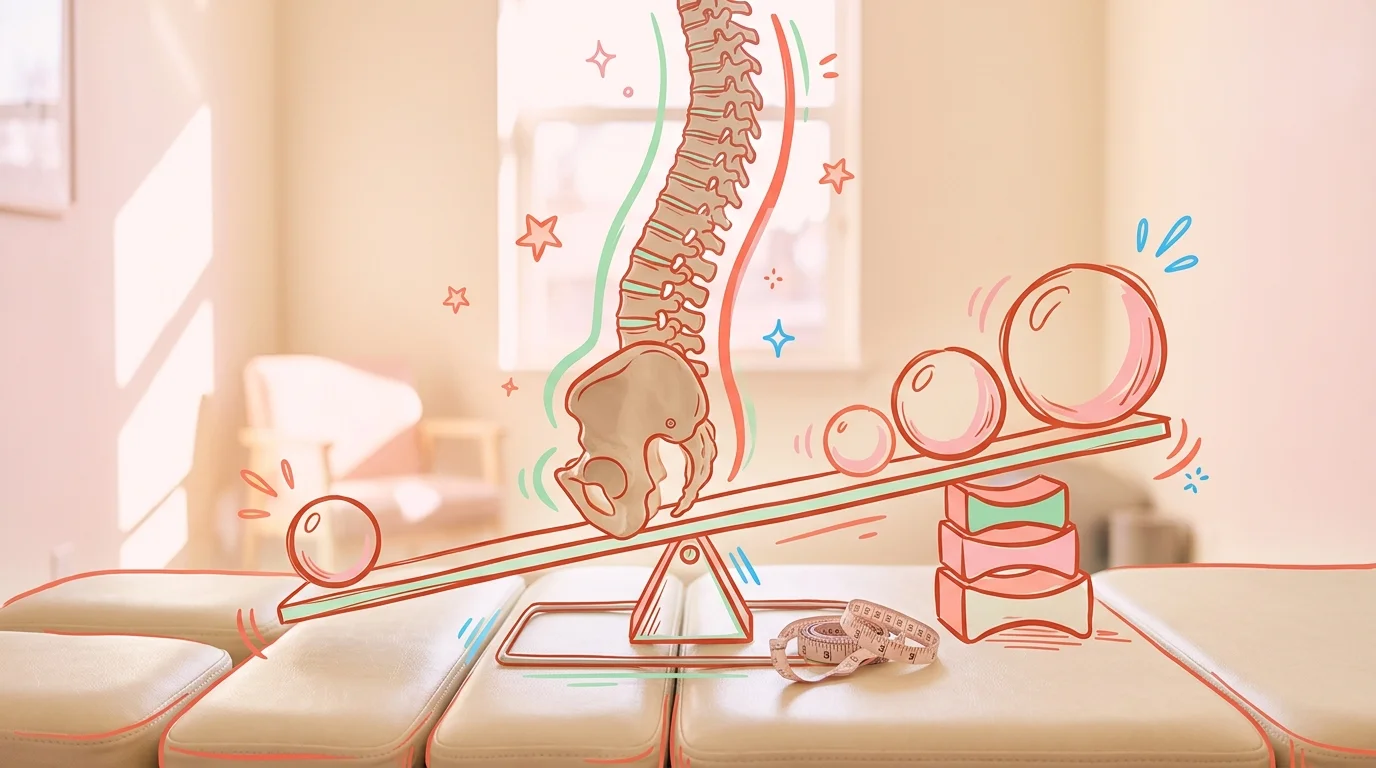
Pregnancy is not a static condition. It is a period of profound and rapid biomechanical change, driven by hormonal shifts and the physical demands of a growing baby. Every structure in the trunk and pelvis adapts on a continuous timeline rather than shifting once and settling.
And these postural shifts are not random. They're the predictable compensations the body makes to stay balanced as its center of gravity moves forward. Researchers tracking this progression often separate it from the sacral-specific findings in a clinical guide to sacral alignment and pelvic balance, because the broader postural pattern comes first and shapes the sacral story that follows.
What Hormones Actually Do to Your Pelvic Ring (and What They Don't)
Hormones get most of the credit for pelvic instability in pregnancy. And relaxin is almost always the one named.
But the mechanism is more contested than most prenatal advice suggests. A study cataloged in PubMed Central found no direct link between elevated relaxin and increased pelvic mobility, despite the long-standing theory that relaxin loosens pelvic ligaments by altering collagen structure in pregnant women.
The Relaxin Myth Most Prenatal Advice Still Repeats
That gap between belief and evidence matters more than it looks. A license alone does not mean someone can read these biomechanical signals.
A general license was built for general adjustment. Sacral analysis in pregnancy is its own trained skill — the ICPA's Webster program teaches it, and it remains rare in everyday practice. That distinction is explored further in this analysis of adjustment safety across the third trimester, where the same credentialing gap shapes clinical outcomes.
Mapping the Postural Shift: How Your Spine and Pelvis Compensate Trimester by Trimester
So what actually drives it? Mechanical load, not hormone levels alone, accounts for most of the compensation researchers track trimester by trimester. As the baby grows, the center of gravity moves forward, and the lumbar spine curves deeper to keep the trunk balanced over the hips.
And that deepening curve is measurable, not theoretical. One clinical dataset puts lumbar curvature at 8.96 degrees in the second trimester, climbing to 9.98 degrees by the third, a shift documented in research indexed through PubMed Central tracking postural change across gestation.
The Lumbar Curve Under Load
Here's why the curve matters. A steeper lumbar arc changes how force travels down through the sacrum and into the pelvic ring. Every added degree loads the sacroiliac joints differently than the trimester before.
This is why symptom patterns evolve rather than repeat. The mechanics behind that shift are covered in detail in this breakdown of pubic symphysis dysfunction and its biomechanical drivers, which extends the lumbar-to-pelvis chain this section maps.
Why Generalized Prenatal Advice Misses the Pelvic Ring Entirely
Most prenatal guidance treats pelvic discomfort as a symptom to soothe rather than a biomechanical event to investigate. Stretches, support belts, and rest advice all target the sensation of pain.
But none of that touches why the sacroiliac joints or pubic symphysis are carrying uneven load in the first place. Generalized advice manages the output. It leaves the mechanical input alone.
| Prevalence Measure | Population | Reported Rate |
|---|---|---|
| Pelvic Girdle Pain or Low Back Pain | All pregnant women, any severity | About 45% |
| Pelvic Girdle Pain or Low Back Pain, Moderate to Severe Only | All pregnant women, mild complaints excluded | About 25% |
The Problem With Treating Pelvic Pain as a Symptom to Manage
The trouble with a standardized care schedule is simple: it assumes every pelvic ring adapts on the same timeline. The 10-to-12-visit standard recommendation applied uniformly regardless of trimester, presentation, or birth goals treats a progressive biomechanical process as if it were fixed at intake.
A protocol built around a fixed visit count cannot track a system that changes week to week. Chiropractic care during pregnancy that follows sacral analysis instead of a preset schedule responds to how load is actually shifting, not to how many visits a chart says are due.
How Common Is Pelvic Girdle Pain, and Why Does It Get Dismissed as Normal
Pelvic girdle pain is often waved off as an unavoidable cost of pregnancy. The data says otherwise. About 45% of all pregnant women experience pelvic girdle pain or low back pain, a figure that only drops to about 25% once mild complaints are excluded, according to findings published through PMC. A complaint affecting close to half of pregnant women is not a footnote. Understanding these changes biomechanically allows for proactive support rather than reactive pain management. There is more on chiropractic care during pregnancy, which lays out how that proactive support works in practice.
Inside the Pelvic Ring: The Architecture of Sacral and Pelvic Alignment
The pelvic ring is not a single bone. It is three bones, the sacrum and two hip bones, joined by ligaments strong enough to bear weight yet built to shift under load. That design turns against itself in pregnancy. A structure engineered for stability now has to trade a portion of that stability for mobility long before birth arrives.
| Structure | Role in the Pelvic Ring | What Misalignment Affects |
|---|---|---|
| Sacrum | Wedges between the two hip bones and transmits spinal load down into the pelvic ring and legs | Uneven sacral positioning changes how force distributes across both sacroiliac joints, altering gait and standing tolerance |
| Sacroiliac Joints | Connect the sacrum to each hip bone, allowing the small controlled shifts the pelvic ring needs during gait and childbirth | Misalignment here concentrates pressure unevenly, a pattern linked to pelvic girdle pain and low back discomfort |
| Pubic Symphysis | Joins the two hip bones at the front of the pelvis, closing the ring and limiting excess anterior motion | Excess movement or asymmetry at this joint is tied to pubic symphysis dysfunction and pain during weight-bearing activity |
| Supporting Ligaments | Bind all three bones together, providing tensile strength that keeps the ring stable under everyday load | Ligament laxity without corresponding structural support leaves the ring dependent on muscular compensation, increasing strain elsewhere in the chain |
The Sacrum as the Keystone
The sacrum sits at the center of this trade-off. It wedges between the two hip bones and carries spinal load down into the legs with every step. Any change in lumbar curve or pelvic tilt passes through the sacrum first. That makes it the structure most exposed to the postural shifts already described.
Assessing and Correcting Pelvic Ring Misalignment: What a Structural Approach Actually Involves
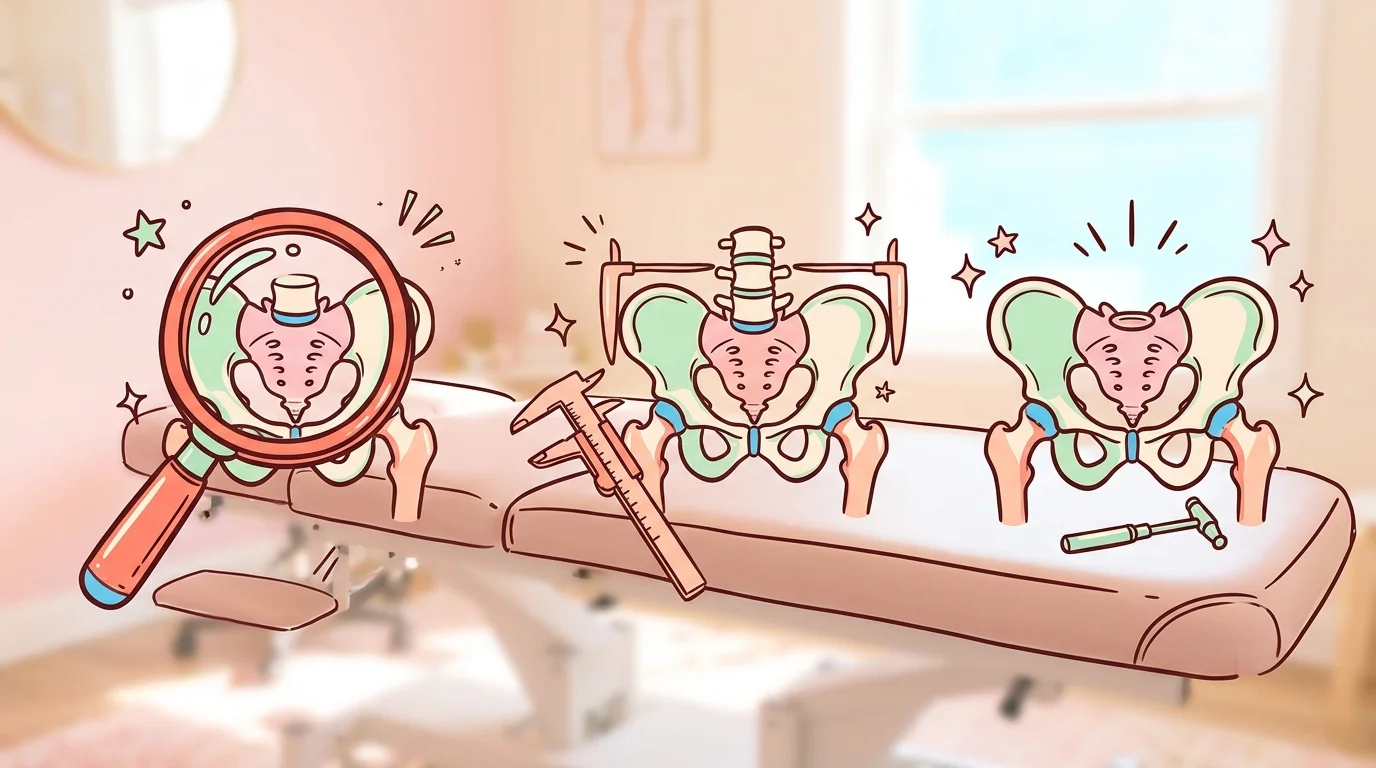
This is the point where a one-pattern care plan falls apart, because a pregnant patient's needs are time-bound and stage-specific. A fixed protocol can't track a pelvic ring that changes structurally week over week. Assessment has to measure what's actually happening in the sacrum and pelvis, not run a default sequence built for a static body.
| Assessment Step | What It Evaluates | Why It Matters for the Pelvic Ring |
|---|---|---|
| Sacral Position Analysis | How the sacrum sits relative to the two hip bones and the lumbar spine above it | Identifies the specific point where postural load is transferring unevenly into the pelvic ring |
| Pelvic Ligament Tension Check | Whether ligament tension around the sacroiliac joints and pubic symphysis is symmetrical or uneven | Uneven tension is what turns normal pregnancy laxity into pelvic girdle pain |
| Trimester-Specific Adjustment Planning | How much the postural pattern has shifted since the last assessment, rather than a fixed visit interval | Keeps the adjustment matched to a pelvic ring that changes structurally week to week |
| Diversified Adjustment Application | The specific adjustment defined by the Webster Technique, applied to enhance neuro-biomechanics in weight-bearing individuals | Distinguishes a sacral-specific correction from a generic spinal adjustment applied without prenatal analysis |
What Makes an Assessment Structural Rather Than Generic
The Webster Technique is defined as a specific assessment and diversified adjustment used to enhance neuro-biomechanics in weight-bearing individuals, according to published positional statements on prenatal chiropractic protocols. That definition separates it from generic spinal work. It requires evaluating sacral position and pelvic ligament tension as a distinct, trimester-specific system rather than treating the pelvis as an extension of the lumbar spine.
Frequently Asked Questions
The biomechanical breakdown above raises specific, practical questions. Here are direct answers to the ones patients ask most.
Is it normal for my hips to feel unstable or 'loose' in the third trimester?
Yes. A softening pelvic ring is a normal part of late pregnancy, not a malfunction. That looseness is the stability-for-mobility trade-off doing its job, though instability that lingers still warrants a sacral evaluation.
Can postural changes in pregnancy cause permanent issues if not addressed?
Unaddressed postural compensation can leave lingering pelvic asymmetry after birth. The body adapts to whatever alignment pattern it holds longest, which is why early evaluation matters more than waiting it out.
How does a Webster-certified chiropractor adjust someone late in pregnancy?
Late-pregnancy adjusting uses side-lying or hands-and-knees positioning to protect the abdomen. The Webster-Certified practitioner assesses sacral position first, then applies a specific, low-force adjustment rather than a generic spinal move.
What's the difference between normal pregnancy back pain and pelvic girdle pain?
Ordinary pregnancy back pain tends to stay centered in the lumbar spine and eases with rest. Pelvic girdle pain concentrates around the sacroiliac joints or pubic symphysis and often worsens with walking or standing.
Can chiropractic care for the pelvis help with a baby's positioning for birth?
Sacral misalignment can create uneven ligament tension across the uterus, which may restrict how freely a baby moves into position. Restoring proper sacral alignment removes that mechanical restriction rather than forcing positioning directly.
Are there specific exercises that support the pelvic ring during pregnancy?
Gentle pelvic tilts and cat-cow movements support the pelvic ring without overstretching ligaments that are already loosening. Skip deep twisting and high-impact movement, since ligament laxity leaves the joints less protected.
How early in pregnancy can pelvic alignment care begin?
Pelvic alignment care can start as soon as postural compensation begins, often early in the second trimester. The earlier it starts, the more time sacral analysis has to track the pelvic ring's progressive changes.
Where This Leaves the Pelvic Ring
The pelvic ring never stops negotiating between stability and mobility across the second and third trimesters. That negotiation is not a flaw in the design. It is the design, and it demands a system built to track it stage by stage rather than a fixed protocol applied at intake.
Sacral analysis resolves that tension instead of ignoring it. Webster-Certified care reads what the sacrum and pelvic ligaments are actually doing at each stage. Then it adjusts to restore proper alignment and neuromuscular function, rather than chasing symptoms after the fact.
A pelvic ring changing this much deserves an assessment built for it, not a generic schedule borrowed from a body that isn't pregnant. That evaluation starts with scheduling a prenatal chiropractic visit.