
How Does Webster-Certified Prenatal Chiropractic Care Resolve Pubic Symphysis Dysfunction?
Pubic symphysis dysfunction is resolved by correcting the pelvic misalignment underneath the pain, not by managing the pain alone. The pelvis works as one biomechanical ring. Two hip bones and the sacrum form it, joined at the front by the pubic symphysis and at the back by the sacroiliac joints. When one part of that ring shifts, often through a sacral subluxation or uneven ligament tension during pregnancy, the whole ring loses its coordinated movement. The pubic symphysis is built for only a little give. Now it is forced to absorb stress it was never designed to carry. That is the mechanical origin of the sharp groin, hip, and lower back pain that comes with the condition. A structural approach finds where the ring has lost its alignment. It then applies a specific, low-force adjustment to restore proper motion at the sacrum and pelvic joints. This is not the same as approaches that address only the symptom. A support belt limits movement and rest reduces irritation, but neither one restores alignment to the ring itself. Correcting the relationship between the sacrum, ilia, and pubic symphysis lowers the abnormal stress at the joint. It also lets the surrounding muscles and ligaments work without compensating for a misalignment somewhere else in the ring. This addresses the root mechanical cause of the instability. It does not simply mask the discomfort for the rest of the pregnancy.
Last Updated: 2026-09-15
What Pubic Symphysis Dysfunction Actually Is (And Why It Gets Dismissed)

Pubic symphysis dysfunction shows up often in pregnancy. And too often it gets waved off as normal discomfort, something to push through until delivery. That dismissal misses what is actually happening at the joint.
This is not pain management. It is a structural imbalance in the pelvic ring, and a clinical breakdown of pelvic ring biomechanics shows how postural shifts through pregnancy load that ring unevenly. Name the condition accurately and you can correct it instead of tolerating it.
Why the Symptom-Relief Standard Falls Short
So the standard response is symptom management. Prescribe a belt, restrict a few movements, send the patient home to wait out the pregnancy. None of it touches the ring itself.
Why Belts and Rest Protocols Don't Hold Up
A belt limits motion at the joint. It does not restore alignment to the ring. Rest reduces irritation without correcting the sacral shift causing it. A DC license alone does not guarantee prenatal specialization, and most practitioners treating pregnant patients never pursue the additional training that does. Understanding why specialized certification changes the scope of prenatal adjustment clarifies why generalized chiropractic care often mirrors the belt-and-rest model instead of correcting it.
How Sacral Misalignment Drives Pelvic Ring Instability
Here's the mechanical trigger: a sacral subluxation is what sets pelvic ring instability in motion. When the sacrum rotates or shifts within the ilia, the whole load path through the ring changes, not just the joint closest to the shift. The Webster Technique is a specific chiropractic analysis and adjustment built to catch exactly this pattern, reduce nervous system stress, and balance the muscles and ligaments around the pelvis. A detailed look at how trimester posture changes reshape this ring shows why that shift rarely stays put in one joint.
| Diastasis Measurement | Structural Classification | Clinical Implication |
|---|---|---|
| Less than 4.0 cm | Stable pelvic ring pattern | Structural correction through sacral and pelvic adjustment addresses the misalignment before labor increases joint stress |
| Greater than 4.0 cm | Complex, unstable pelvic injury with potential sacroiliac joint damage | Requires pelvic ring reduction and fixation rather than adjustment alone |
| Any measurable diastasis with unresolved sacral subluxation | Ring instability originating at the sacrum, not the pubic symphysis alone | The Webster Technique targets the sacral and ligament imbalance driving the diastasis rather than the joint gap alone |
The Cost of an Unaddressed Pelvic Ring Through Labor
An unaddressed ring does not hold still through labor. Pubic symphyseal diastasis over 4.0 cm marks a complex, unstable pelvic injury, one that requires pelvic ring reduction and fixation, according to research indexed in PubMed Central. That threshold describes pubic symphysis disruption during delivery itself. A ring already loosened by unresolved sacral misalignment starts labor with less structural reserve against that outcome.
What Webster-Certified Analysis Adds That General Adjustment Doesn't
A general adjustment goes after joint restriction wherever it shows up. Webster Certification adds one thing on top: a specific analysis protocol for sacral misalignment and the round ligament tension riding alongside it. That single distinction decides whether a ring imbalance gets caught at its source or just worked around, visit after visit.
| Evaluation Component | General Chiropractic Adjustment | Webster-Certified Analysis |
|---|---|---|
| Sacral Position Analysis | Checked for general joint restriction, without a dedicated protocol for sacral asymmetry | Analyzed specifically for sacral subluxation patterns using a dedicated Webster Technique protocol |
| Round Ligament Assessment | Not typically part of a standard evaluation | Evaluated for tension imbalances contributing to pelvic ring instability |
| Adjustment Focus | Addresses whichever joint presents restriction at the time of the visit | Targets the sacrum and pelvic ring as a coordinated structure, following Webster Certification protocol |
| Training Pathway | Included in general chiropractic licensure without pregnancy-specific requirements | Requires additional certification through the ICPA beyond a standard DC license |
| Underlying Goal | Reduces restriction at the joint being adjusted during that visit | Restores coordinated ring biomechanics to resolve the mechanical source of instability |
The Credentialing Gap Most Patients Never See
The training behind this analysis lives in one place: the ICPA's Webster program, a step beyond licensure that most chiropractors never take. So the same title on the same door can cover very different scopes of practice, and finding specialized support for pelvic ring correction during pregnancy means confirming which scope a provider actually holds.
How a Webster-Certified Adjustment Sequence Actually Works
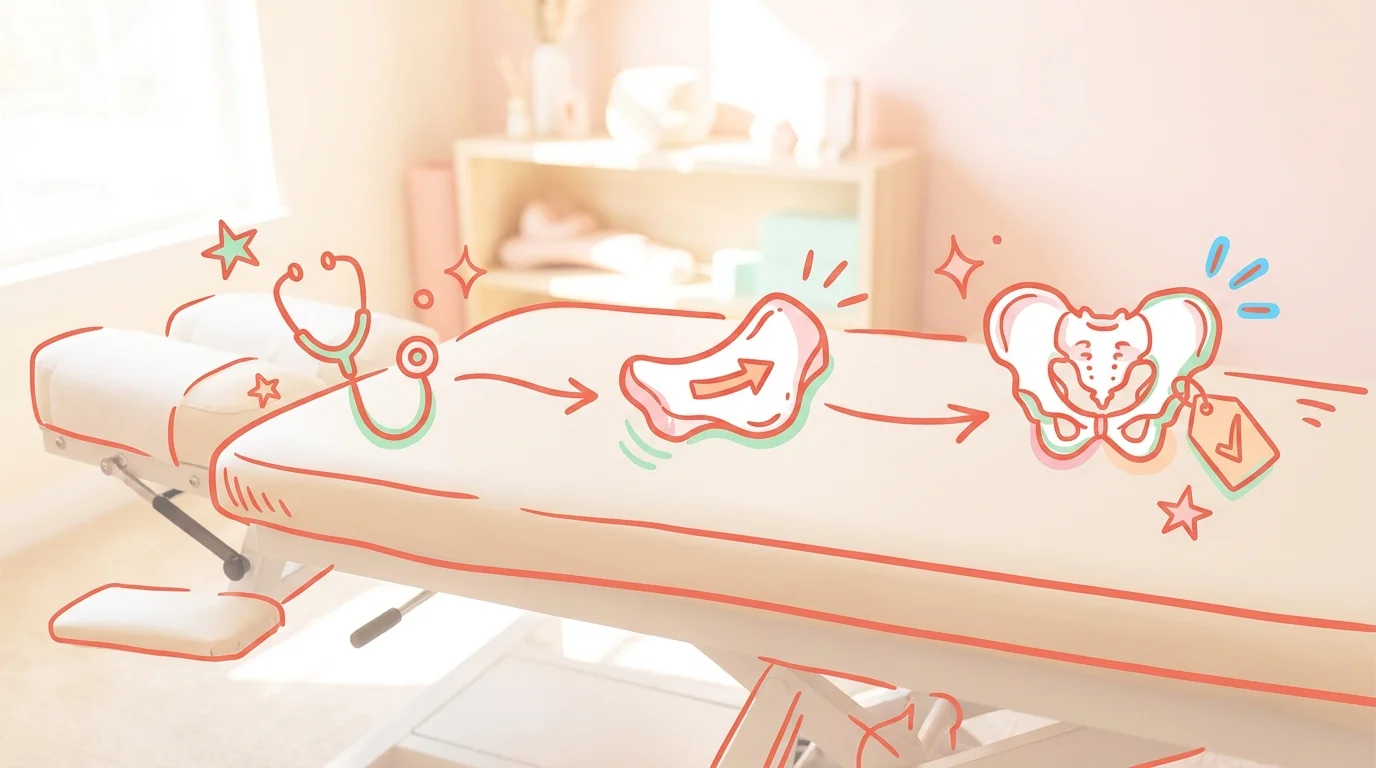
A Webster-Certified adjustment sequence starts with analysis, not a generic spinal check. The practitioner assesses sacral base position, round ligament tension, and pelvic ring symmetry before any adjustment is made. Pubic symphysis dysfunction has been reported in 31.7% of pregnant women, a prevalence high enough that this analysis belongs in every prenatal visit, not just the ones where pain has already appeared. That figure is documented in research indexed through PMC. Once the sacral misalignment is identified, a specific, low-force adjustment corrects the ring's load path rather than chasing the symptom it produces downstream.
| Care Metric | Reported Finding |
|---|---|
| Prevalence in Pregnant Patients | Pubic symphysis dysfunction has been reported in 31.7% of pregnant women |
| Visit Satisfaction After Chiropractic Care | Satisfaction scores showed a mean difference of −0.7322 (p < 0.005) from baseline to follow-up |
Reading the Numbers Behind Pelvic Ring Cases
The case for this sequence holds up in what patients report, not just in biomechanics. Pregnant patients receiving chiropractic Webster Technique care reported significantly improved visit satisfaction, a shift documented in findings available through PubMed Central. I hold Webster Certification through the ICPA under California Chiropractic License #33130, and that credential is what separates this sequence from a general adjustment applied to a pregnant patient.
Frequently Asked Questions
Once the framework is clear, the mechanics of pelvic ring correction tend to raise the same questions. Here are the ones that come up most in the office.
Is chiropractic care safe for pubic symphysis pain during pregnancy?
Chiropractic adjustment is widely regarded as safe throughout pregnancy, including for pubic symphysis dysfunction. A Webster-Certified adjustment uses a low-force technique calibrated for the pregnant pelvis, never generic spinal force.
How is the Webster Technique different from a regular chiropractic adjustment for SPD?
A general adjustment goes after restriction wherever it shows up. The Webster Technique reads sacral base position and round ligament tension first, targeting the ring's actual load imbalance instead of the nearest ache.
How many sessions does it typically take to feel relief from SPD with Webster-certified care?
No fixed session count applies to everyone. Relief depends on how long the misalignment has been present and how the ring compensated around it, so progress gets reassessed at every visit rather than promised on a schedule.
Can Webster-certified chiropractic care help prevent SPD from getting worse or recurring in future pregnancies?
Correcting the ring's alignment lowers the abnormal stress that drives instability, which reduces the chance of recurrence within the same pregnancy. Holding that alignment through future pregnancies takes ongoing sacral and pelvic assessment, not a one-time fix.
What happens if pubic symphysis dysfunction is left unaddressed during pregnancy and postpartum?
Left unaddressed, the misalignment leaves the ring compensating through the rest of pregnancy and into labor with less structural reserve. Postpartum, that same imbalance can persist and keep producing pain long after delivery.
What does a sacral subluxation assessment actually measure?
A sacral subluxation assessment measures the sacrum's position and rotation within the ilia, along with the tension pattern in the surrounding ligaments. That measurement pinpoints where the ring lost its coordinated alignment before a single adjustment is applied.
The Bottom Line
The pelvis is a ring. It is not a set of isolated aches. Pain at the pubic symphysis is that ring losing its coordinated alignment, never a stand-alone injury to manage on its own.
A belt restricts motion. Rest calms irritation. But neither one realigns the sacrum, the ilia, or the pubic symphysis, and neither restores the ring's ability to move as one coordinated structure through the rest of pregnancy.
So a structural approach means finding where the ring shifted and correcting it right there. That is what Webster-Certified prenatal chiropractic care is built to do, and it is why the adjustment reaches the cause instead of the ache. If pubic symphysis pain has become part of your pregnancy, schedule a prenatal evaluation at Momma's Chiro.